Why is the biogas refinery being planned in Oripää?

Oripää is centrally located within the Archipelago Sea catchment area. Within a radius of less than 65 kilometres of Oripää, there are numerous pig farms and other agricultural activities that can supply the necessary feedstock for the plant. An industrial-scale biogas plant requires sufficient feedstock to operate.

In Oripää, the project benefits from strong local support and good opportunities for collaboration with local contractors.

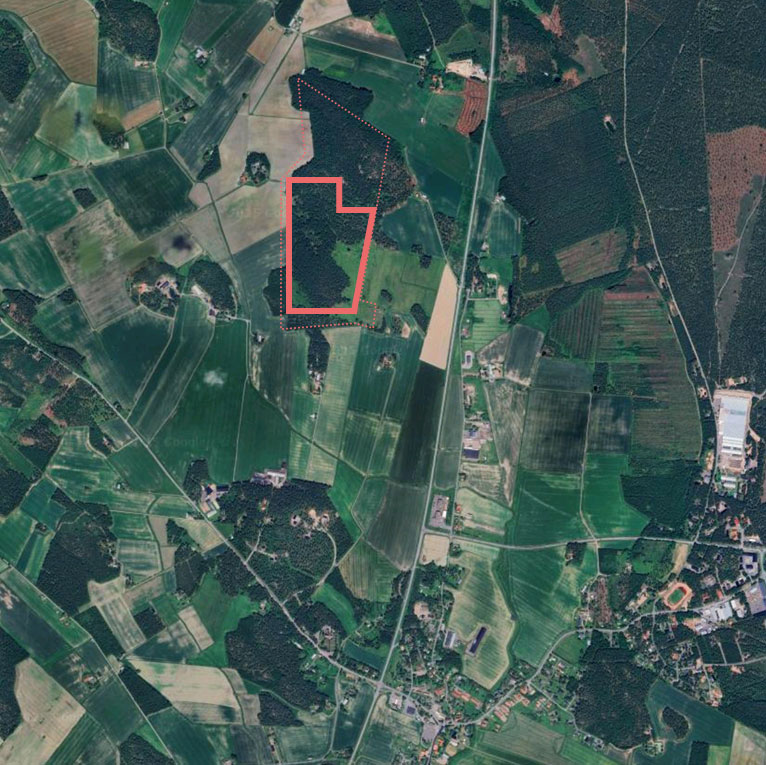
How was the Grönkulla area chosen as the location for the biorefinery?

Several alternatives were assessed.The Grönkulla area was selected due to its good transport connections. According to current plans, traffic generated by the biorefinery will not significantly increase traffic volumes in the area. The area has previously been used for forestry.

What types of feedstocks does the biorefinery process? Where do they come from?

The biorefinery processes approximately 600,000 tons of raw materials annually, half of which is pig manure. Additionally, it utilises manure from other livestock, field biomass, crop residues, and clean side streams from the food industry.

What matters most is that the feedstocks do not compete with food or feed production. That is why all feedstocks are classified as waste or residue streams. A residue refers to a substance that is not produced intentionally as a primary product, but is generated as a by-product of another activity. Nor has the production process been modified for the purpose of generating that by-product.

All feedstocks are sourced locally. There is no shortage of supply. According to public sources, within a 65-kilometre radius of the biorefinery, approximately 2.7 million tons of agricultural side streams alone are generated annually.

The biorefinery receives no feedstocks or waste from abroad.

Will the biorefinery emit odours?

No. All odorous raw materials are processed in negative-pressure halls, where odorous gases are collected and processed. Only clean air is released into the atmosphere.

Transportation uses equipment that does not release odours into the surrounding environment.

When fields are fertilised with digestate instead of slurry, the application is associated with significantly less odour.

What about noise?

The biorefinery’s operations do not produce significant noise. The main sources of sound are fans and compressors inside the refinery, as well as truck traffic. Transport is mainly carried out on weekdays and during the day, so it does not cause noise at night.

How much traffic will the biorefinery generate?

Logistics are planned to be as efficient as possible. Whenever feasible, transports will operate as return trips: feedstocks are delivered to the biorefinery and products are transported onward using the same vehicles. This minimizes empty runs and improves overall transport efficiency.

During normal operations, the biorefinery will generate on average 60–70 heavy vehicle movements per day. During the harvest season for field biomass, the number of daily heavy vehicle movements will increase by approximately 100. In addition, personnel traffic is estimated at around 15–20 passenger vehicles per day.

The nearest connection to the main road network is located east of the site, along regional road 41 between Aura and Huittinen. In 2023, the average daily traffic volume on this road was 3,213 vehicles, of which 514 were heavy-duty vehicles.

What impact does the refinery have on waterways?

The biorefinery significantly reduces nutrient runoff into the Archipelago Sea, the Bothnian Sea and nearby waters. The refinery collects manure from almost the entire area from which nutrients flow into the Archipelago Sea. The refinery can separate hundreds of tonnes of phosphorus from manure, which is processed into recycled fertilisers and applied more precisely. Currently, the total phosphorus load entering the Archipelago Sea is an average of 460 tonnes per year.

Wastewater and stormwater generated by the biorefinery processes are treated appropriately.

How many jobs will the project create?

We aim to use as much local labour as possible for the project.

During construction, the project is expected to generate approximately 500 person-years of employment. During operation, the biorefinery will directly employ approximately 20 people, with additional demand for maintenance and transport services. We are currently compiling a list of local contractors and service providers. Please contact us if you are interested in the employment opportunities offered by the project.

Grönkullan tontti