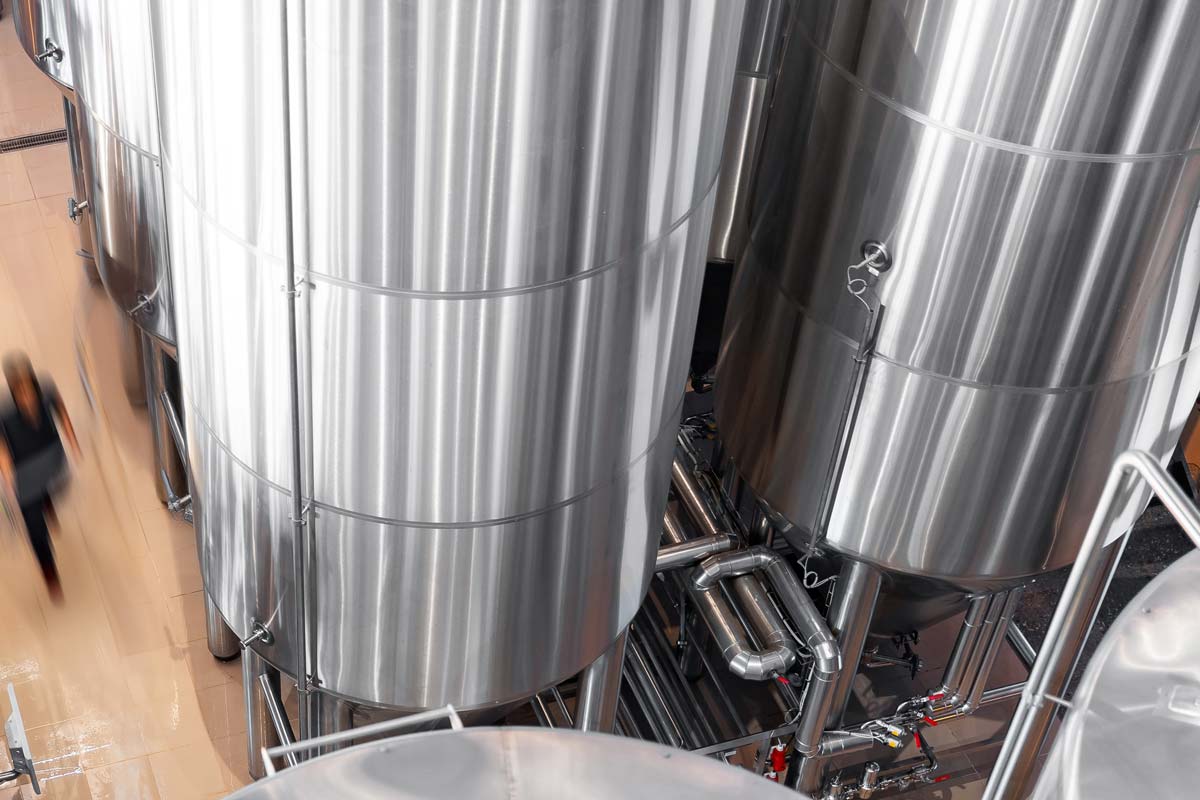
Biogas is produced when manure, plant matter and other organic materials decompose in an anaerobic environment in large, sealed tanks. In this process, microbes convert biomass into gas and nutrient-rich digestate.

The gas becomes usable green energy once it has been cleaned.

Raw biogas contains methane, as well as carbon dioxide, water, and impurities. During cleaning, the gas is filtered and the carbon dioxide is recovered. The end result is biomethane consisting almost entirely of methane, which is suitable for the gas network and as a transport fuel.

The recovered carbon dioxide is used in methanation, i.e. the production of e-methane.
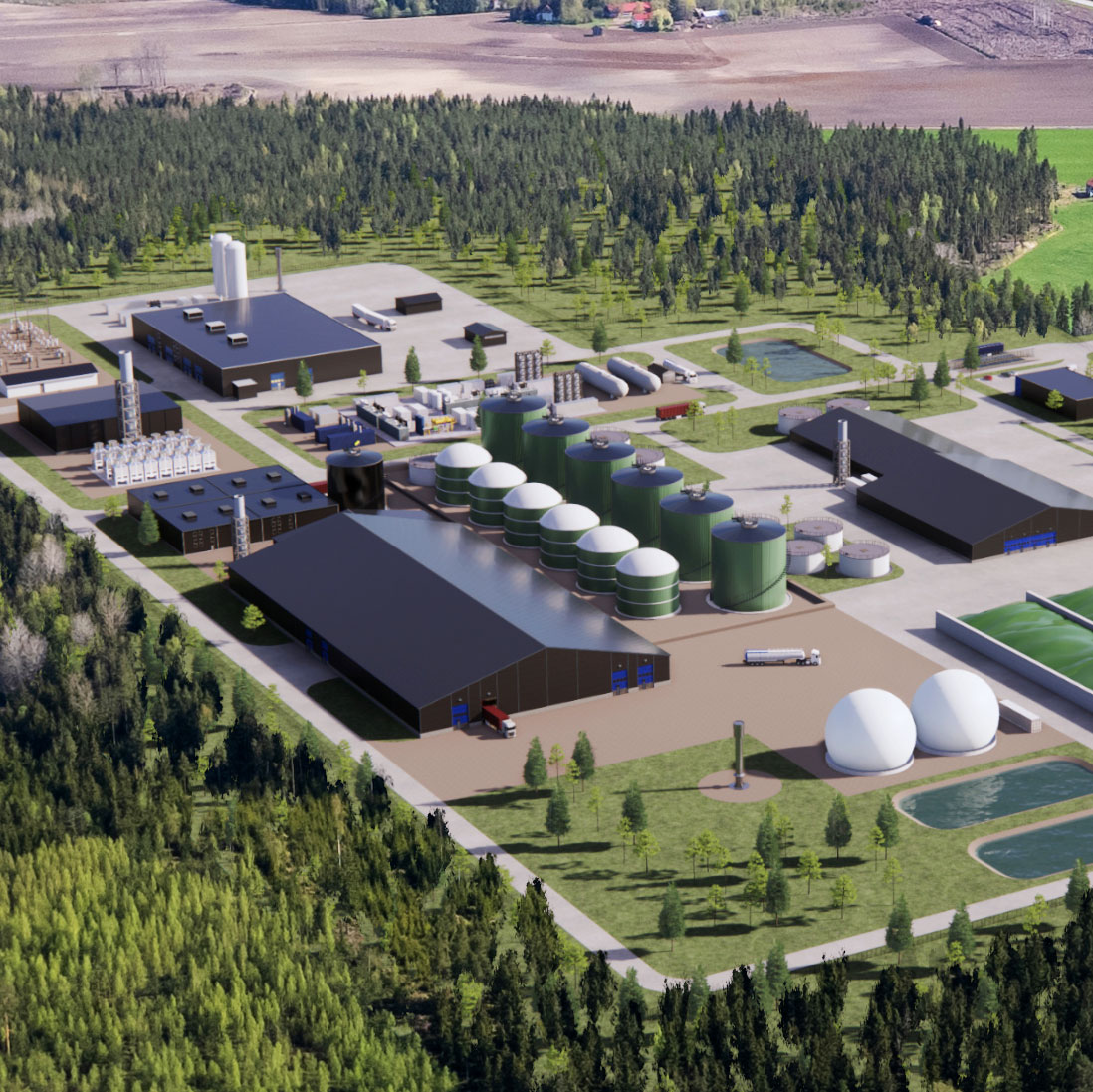
In addition to biomethane, the Southwest Finland Biorefinery produces so-called e-methane. It is produced from hydrogen generated using renewable electricity and carbon dioxide recovered from biogas purification. The chemical composition of both methanes is identical, only the production method differs. Therefore, they can be combined.

The hydrogen that forms the basis of e-methane is produced by splitting water into oxygen and hydrogen using electricity. This process is called electrolysis. When the electricity comes from renewable energy sources, the hydrogen is also green, meaning it is emission-free.

Electrolysis generates significant amounts of heat, which is utilised in drying fertilisers.

In the biogas process, nutrients are not lost but are retained in the digestate. Organic digestate can be returned to fields and used as fertiliser. Another option is to further process it into dry organic fertilisers such as biopellets.

Drying digestate into fertiliser requires a great deal of heat energy, which is released during the production of e-methane. Dry organic fertilisers can be transported to where they are needed. They increase Finland’s self-sufficiency in fertilisers and replace fossil-based mineral fertilisers.